
Sling 2025 • Sling Rewards
Sling 2025 • Sling Rewards
Sling 2025 • Sling Rewards
From luck to something
you can count on
From luck to something
you can count on
From luck to something
you can count on
Turning engagement into something users can actually use. Blending habit, value, and trust into one rewards system.
Turning engagement into something users can actually use. Blending habit, value, and trust into one rewards system.
Turning engagement into something users can actually use. Blending habit, value, and trust into one rewards system.
5.5M
5.5M
coins issued
in a month
coins issued
in a month
3.7M+
3.7M+
coins
redeemed
monthly
hours watched
67.2%
67.2%
earn → spend
conversion rate
earn → spend
conversion rate
Product
Sling TV
Scope
Rewards Mobile App
Rewards • Mobile Apps
Focus
Spin & Win + Offer wall
Rewards Spin & Win + Offer Wall
Role
Sr. Product Designer (Engagement)
Impact made
Impact made
5.5M+ coins issued in a month
3.5M+ coins issued in a month
3.7M+ coins redeemed
3.7M+ coins redeemed
67.2% redemption rate
67.2% redemption rate
Contents
Sling Rewards
Sling Rewards
Sling Rewards
Turning watching into something
you can actually use
Turning watching into something
you can actually use
Turning watching into something you can actually use
Project overview
Sling Rewards is Sling TV’s engagement layer, built to drive repeat viewing and give users more value over time.
This work evolved the experience from Spin & Win, a chance-based daily streak mechanic, into a broader rewards model with Offer Wall, where users could earn value they could actually use inside the product.
I led the design thinking behind that shift, making rewards feel more useful to users and more sustainable for the business.
Project overview
Sling Rewards is Sling TV’s engagement layer, built to drive repeat viewing and give users more value over time.
This work evolved the experience from Spin & Win, a chance-based daily streak mechanic, into a broader rewards model with Offer Wall, where users could earn value they could actually use inside the product.
I led the design thinking behind that shift, making rewards feel more useful to users and more sustainable for the business.
Timeline
3 Months — vendor partnerships
6 Months — product design and development
2 Months — testing and validation
1 Month — launch and GTM
Stakeholders
Senior leadership
Engagement team
Marketing
Legal Team
External Partners - Fluent
Device developers iOS + Android
Timeline
3 Months — vendor partnerships
6 Months — product design and development
2 Months — testing and validation
1 Month — launch and GTM
Stakeholders
Senior leadership
Engagement team
Marketing
Legal Team
External Partners - Fluent
Device developers iOS + Android
Timeline
3 Months — vendor partnerships
6 Months — product design and development
2 Months — testing, launch and GTM
Stakeholders
Senior leadership
Engagement team
Marketing
Legal Team
External Partners - Fluent
Mobile developers iOS + Android
THE HOOK
THE HOOK
THE HOOK
We built Spin & Win to drive viewing
We built Spin & Win to drive viewing
We built Spin & Win to drive viewing
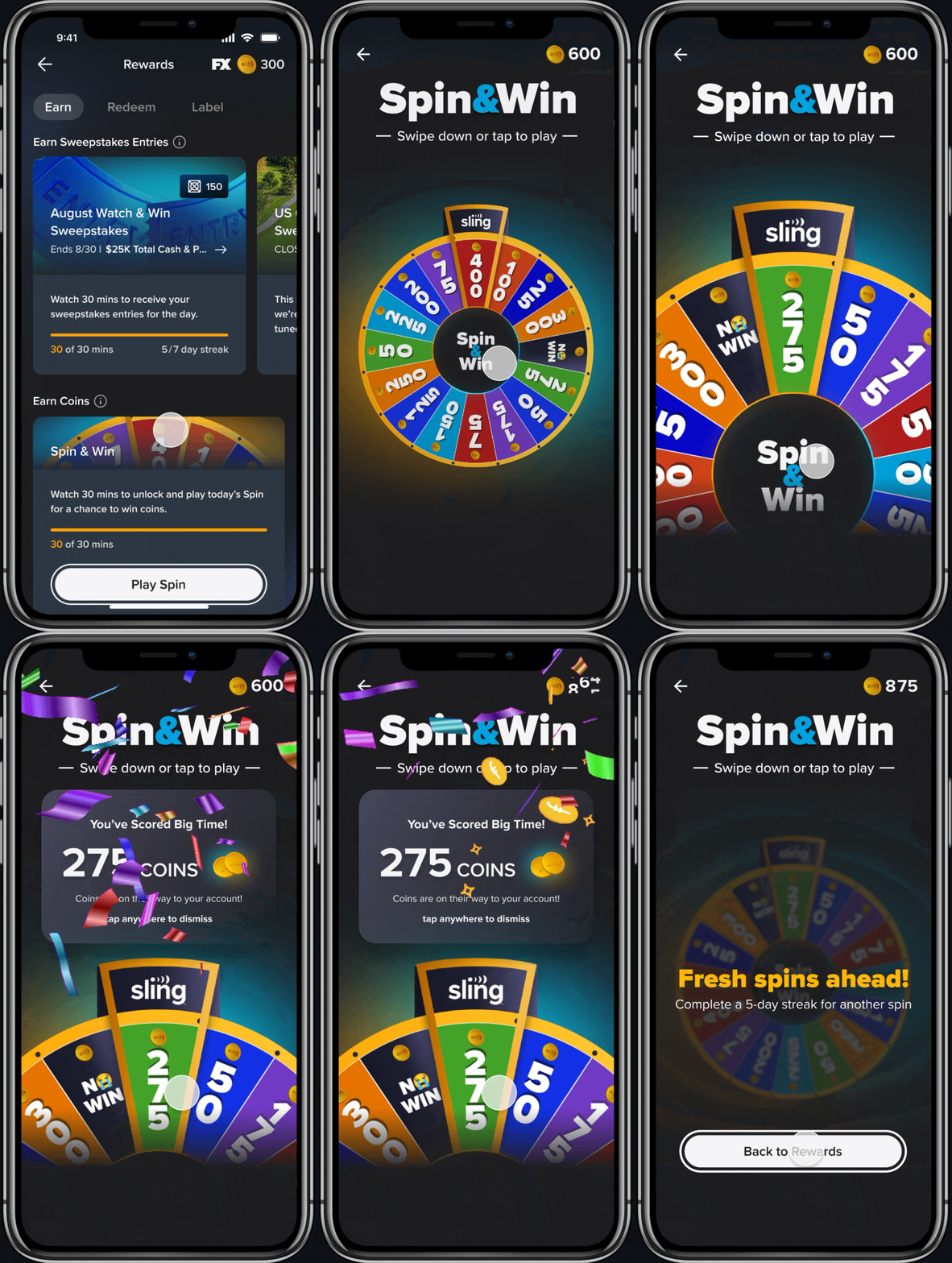
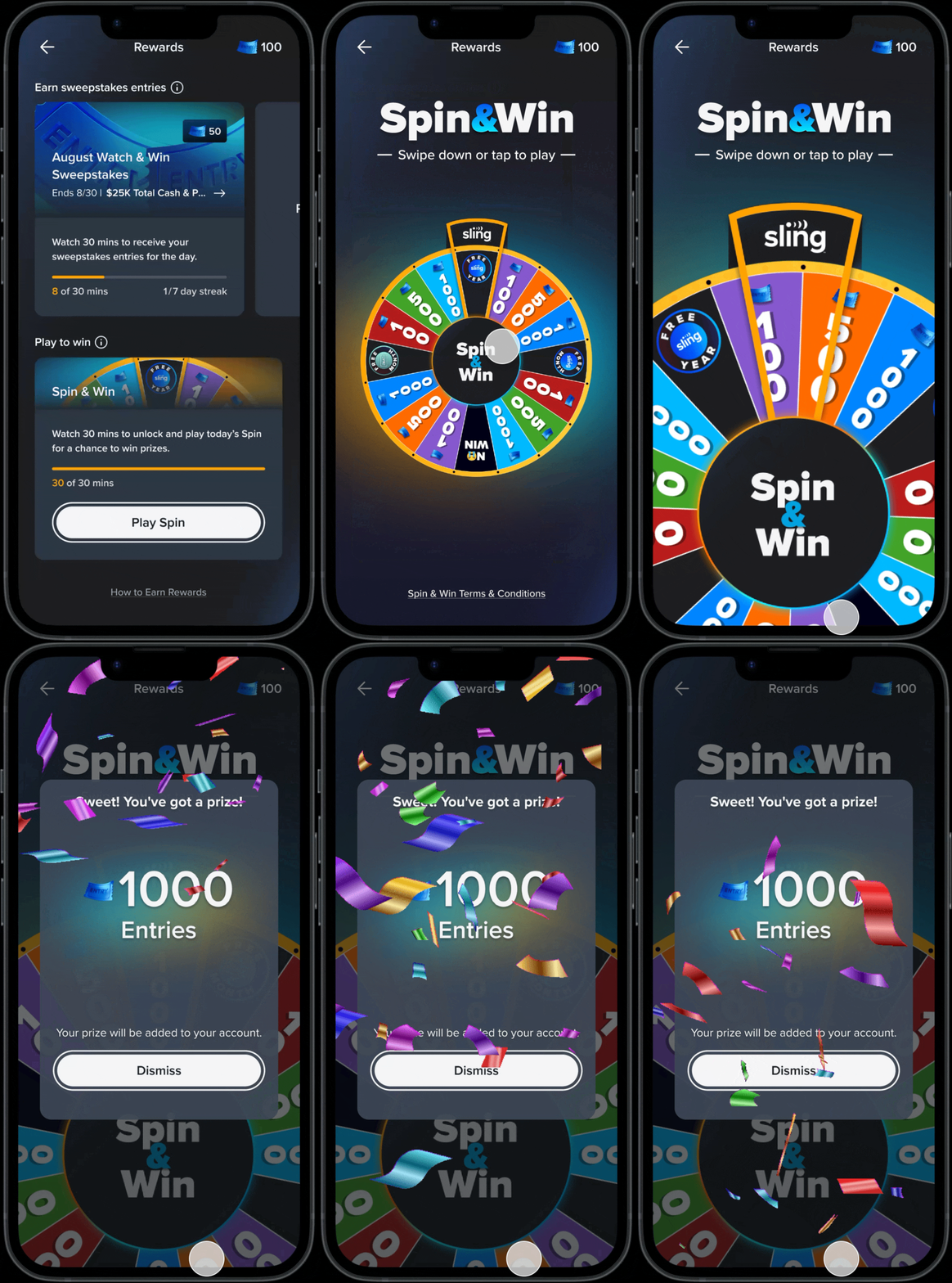
We were looking for a way to make viewing more habitual, not just something people did in bursts. The idea was simple: watch Sling for 30 minutes, unlock a spin, try your luck, and come back the next day to keep the streak going.
Spin & Win worked because it added a lightweight layer of excitement to an existing behavior. It gave users a small reason to return daily, and for a while, that was enough. Viewing became more consistent, spins became part of the routine, and the system started doing exactly what it was designed to do.
For a while, it felt like we had nailed it.
We were looking for a way to make viewing more habitual, not just something people did in bursts. The idea was simple: watch Sling for 30 minutes, unlock a spin, try your luck, and come back the next day to keep the streak going.
Spin & Win worked because it added a lightweight layer of excitement to an existing behavior. It gave users a small reason to return daily, and for a while, that was enough. Viewing became more consistent, spins became part of the routine, and the system started doing exactly what it was designed to do.
For a while, it felt like we had nailed it.
We were looking for ways to get people to watch more consistently, not just binge once in a while, but actually come back every day. Spin & Win came out of that idea. Watch for 30 minutes, unlock a spin, try your luck, and come back the next day to keep your streak going. It was simple, fun, and it worked. People started showing up more, and spins quickly became part of the routine.
For a while, it felt like we had
nailed it.
THE TRADEOFF
THE TRADEOFF
THE TRADEOFF
It worked, but something felt off
It worked, but something felt off
It worked, but something felt off
As Spin & Win scaled, a different pattern started to emerge.
People were still showing up, still spinning, still engaging. But the experience did not always feel rewarding. Users could do everything right, watch consistently, keep their streak going, and still walk away with nothing meaningful in return.
At the same time, the system was getting heavier on the business side. Every reward, every prize, every outcome was funded by Sling. The more engagement we drove, the more expensive the model became to sustain.
So the problem was no longer just about participation. It was about whether the experience felt fair to users, and whether it could keep making sense for the business.
It was working, but not in the way we needed it to.
As Spin & Win scaled, a different pattern started to emerge.
People were still showing up, still spinning, still engaging. But the experience did not always feel rewarding. Users could do everything right, watch consistently, keep their streak going, and still walk away with nothing meaningful in return.
At the same time, the system was getting heavier on the business side. Every reward, every prize, every outcome was funded by Sling. The more engagement we drove, the more expensive the model became to sustain.
So the problem was no longer just about participation. It was about whether the experience felt fair to users, and whether it could keep making sense for the business.
It was working, but not in the way we needed it to.
As Spin & Win scaled, a different pattern started to emerge.
People were still showing up, still spinning, still engaging. But the experience did not always feel rewarding. Users could do everything right, watch consistently, keep their streak going, and still walk away with nothing meaningful in return.
At the same time, the system was getting heavier on the business side. Every reward, every prize, every outcome was funded by Sling. The more engagement we drove, the more expensive the model became to sustain.
So the problem was no longer just about participation. It was about whether the experience felt fair to users, and whether it could keep making sense for the business.
It was working, but not in the way we needed it to.
As Spin & Win scaled, a different pattern started to emerge.
People were still showing up, still spinning, still engaging. But the experience didn’t always land the way we expected. You could do everything right, watch consistently, keep your streak going, and still walk away with nothing.
Over time, that started to show up outside the product too.
We began seeing a consistent theme in how people talked about the experience:
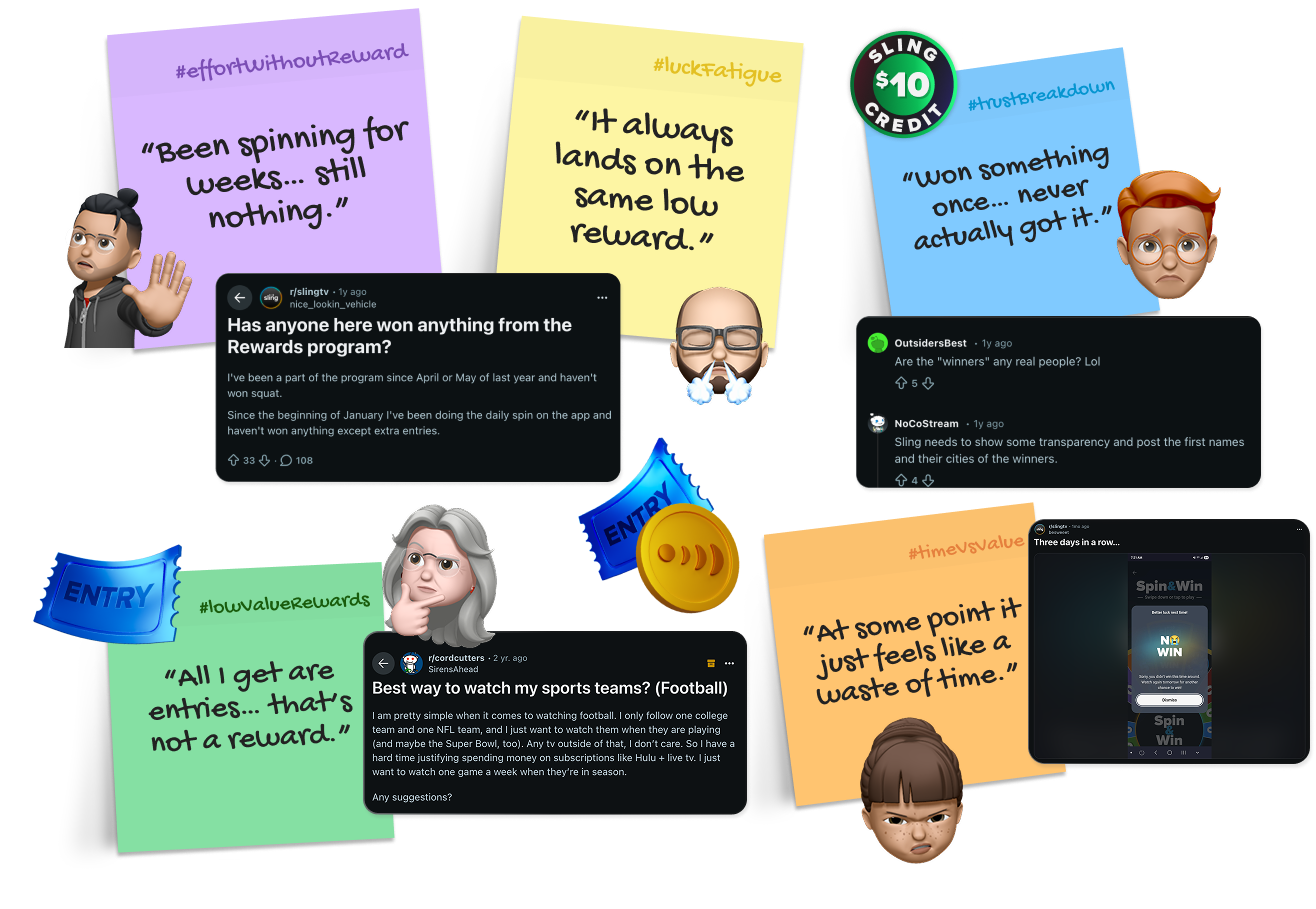
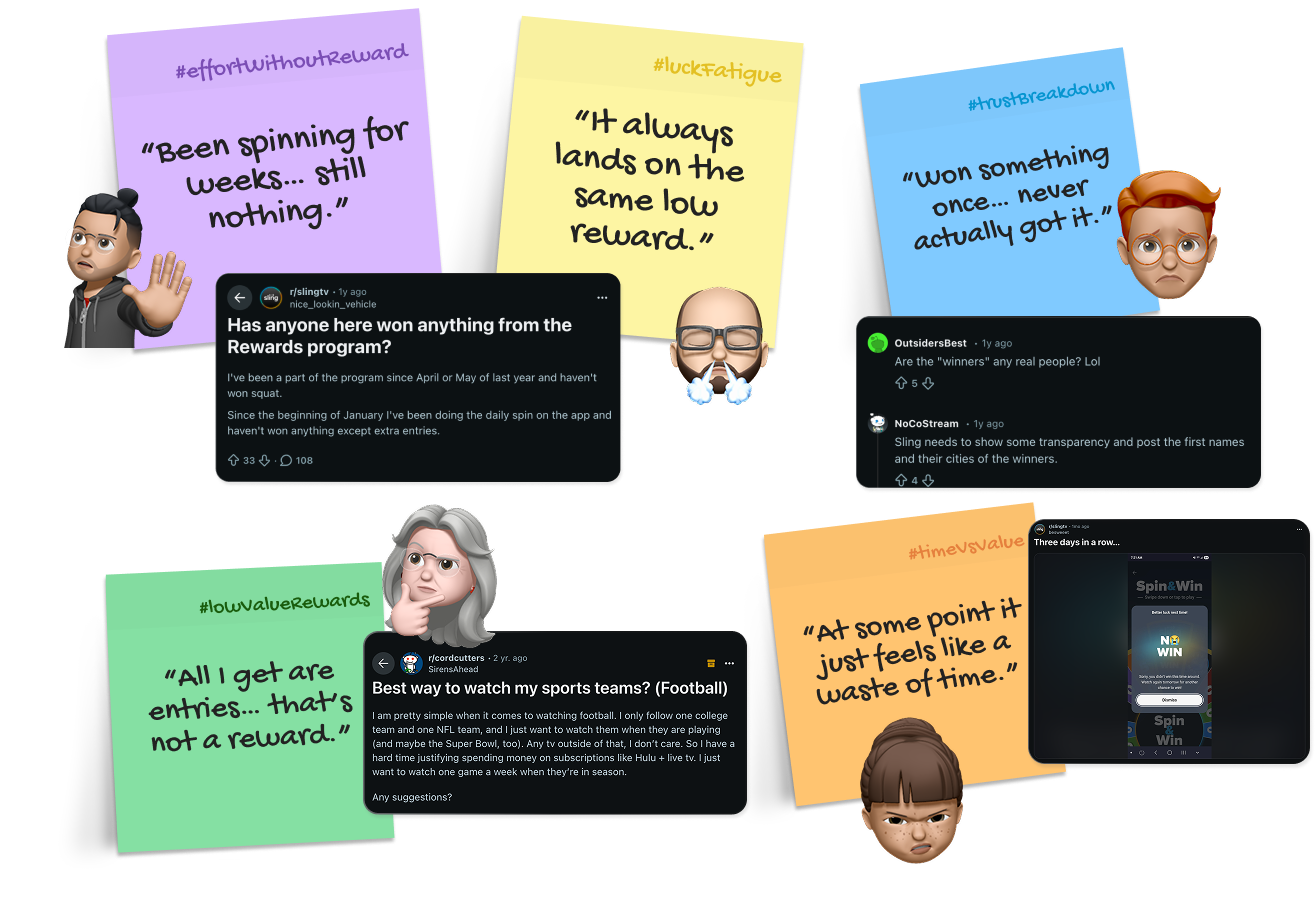
It wasn’t just about low rewards. It was about a growing gap between effort and outcome.
At the same time, the system itself was getting heavier. Every reward, every prize, every outcome was funded by us. The more engagement we drove, the more it cost to sustain.
It was working, but it wasn’t building trust. And it definitely wasn’t something we could scale as-is.
THE TURN
The moment we reframed the problem
The easy answer would have been to tweak the odds, increase prize values, or make the rewards bigger. But that would have kept us in the same loop, relying on chance while increasing cost.
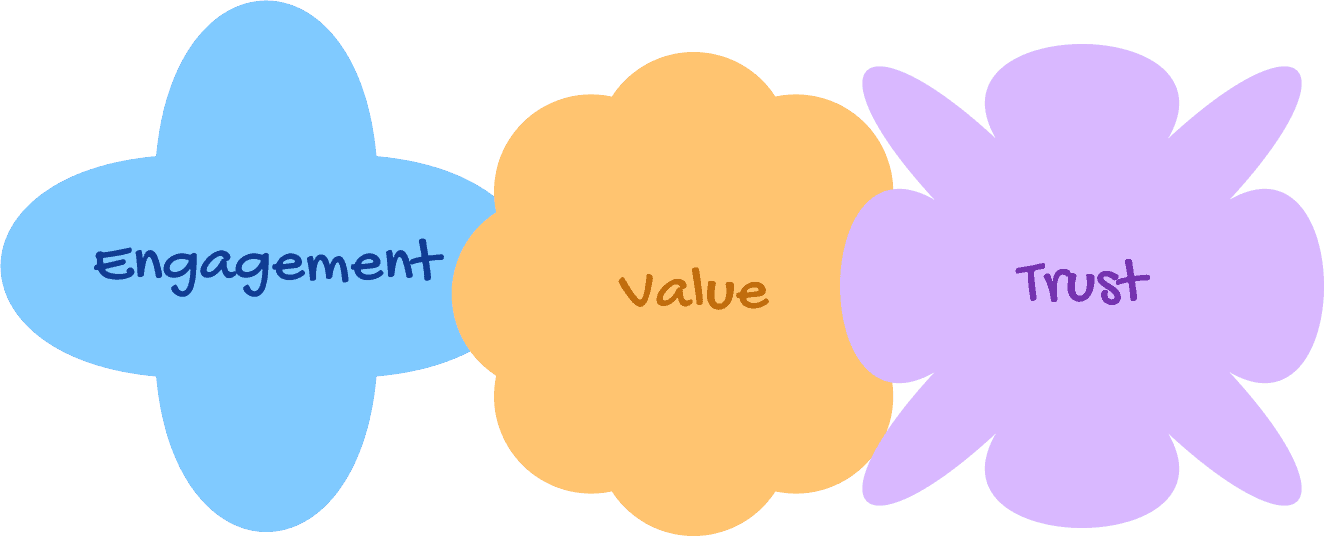
We stepped back and looked at the experience through three things that had to work together: engagement, value, and trust.
What we were really seeing was not just a rewards problem. It was a value problem.
Users were no longer showing up just for a fun moment. They were starting to expect something tangible in return. And once that expectation exists, the system has to deliver in a way that feels credible.
That shift reframed the opportunity:
The easy answer would have been to tweak the odds, increase prize values, or make the rewards bigger. But that would have kept us in the same loop, relying on chance while increasing cost.
We stepped back and looked at the experience through three things that had to work together: engagement, value, and trust.
What we were really seeing was not just a rewards problem. It was a value problem.
Users were no longer showing up just for a fun moment. They were starting to expect something tangible in return. And once that expectation exists, the system has to deliver in a way that feels credible.
That shift reframed the opportunity:
The easy answer would have been to tweak the odds, increase prize values, or make the rewards bigger. But that would have kept us in the same loop, relying on chance while increasing cost.
We stepped back and looked at the experience through three things that had to work together: engagement, value, and trust.
What we were really seeing was not just a rewards problem. It was a value problem.
Users were no longer showing up just for a fun moment. They were starting to expect something tangible in return. And once that expectation exists, the system has to deliver in a way that feels credible.
That shift reframed the opportunity:
How might we keep the excitement that drives engagement, while giving users a more reliable sense of value and building a model that is sustainable for the business?
How might we keep the excitement that drives engagement, while giving users a more reliable sense of value and building a model that is sustainable for the business?
How might we keep the excitement that drives engagement, while giving users a more reliable sense of value and building a model that is sustainable for the business?
From that point on, the goal was not to replace engagement with rewards. It was to connect engagement to value in a way users could actually feel.
From that point on, the goal was not to replace engagement with rewards. It was to connect engagement to value in a way users could actually feel.
From that point on, the goal was not to replace engagement with rewards. It was to connect engagement to value in a way users could actually feel.
HOW IT COMES TOGETHER
HOW IT COMES TOGETHER
HOW IT COMES TOGETHER
Two ways to engage, one experience
Two ways to engage, one experience
Two ways to engage, one experience
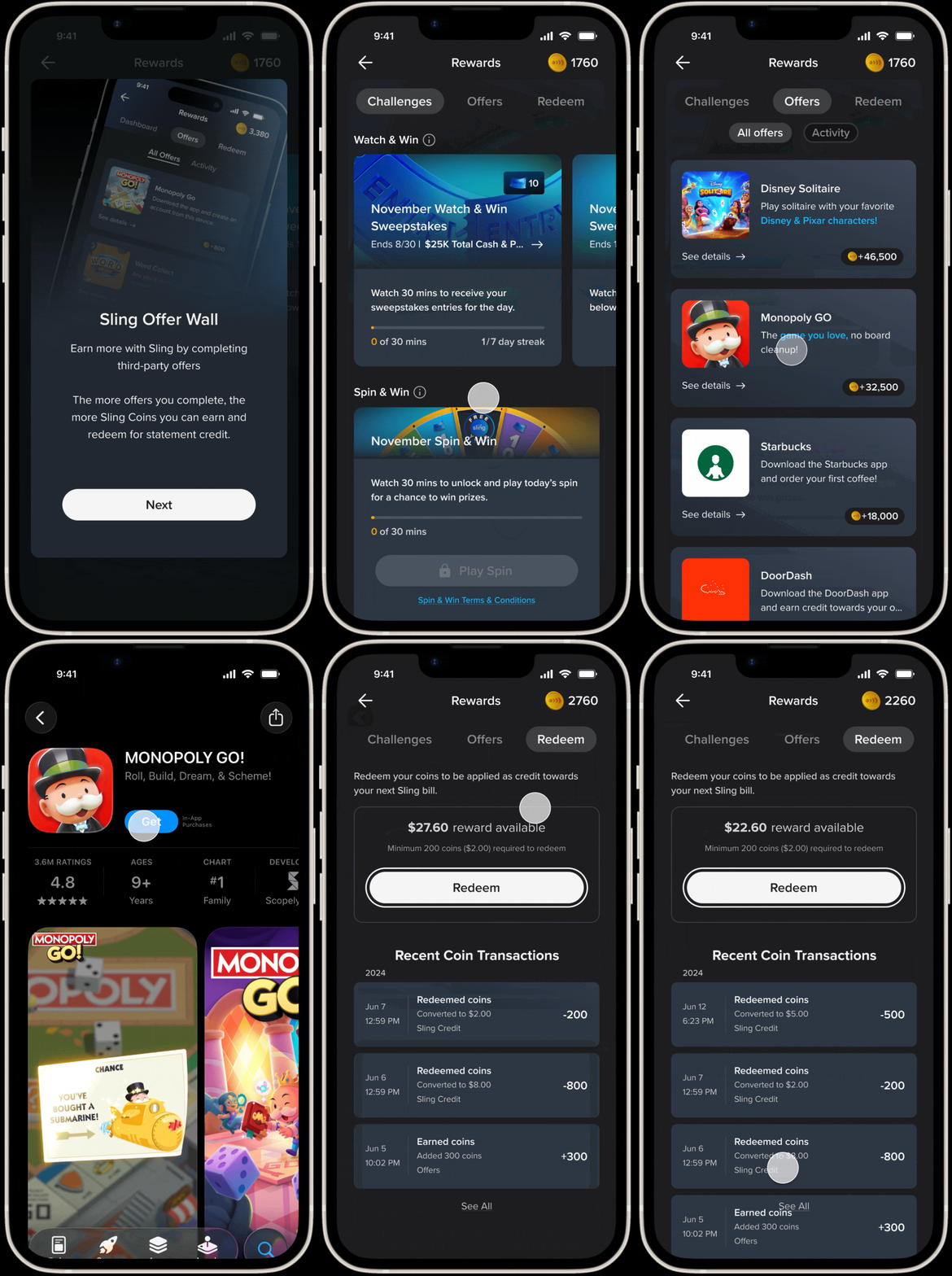
Instead of replacing Spin & Win, we built alongside it.
Spin & Win stayed exactly where it was, continuing to drive daily behavior and give users that quick moment of excitement when they unlocked a spin.
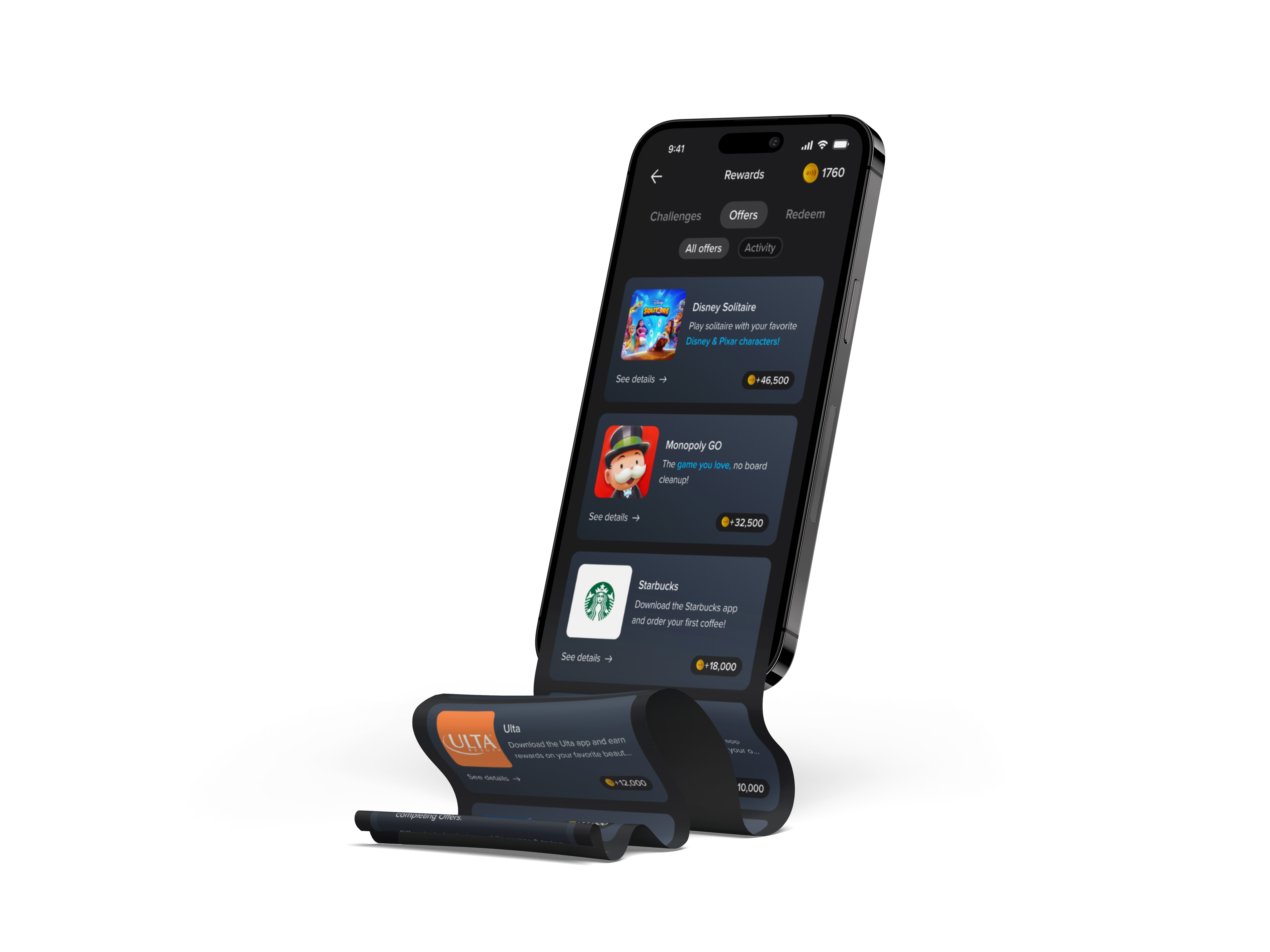
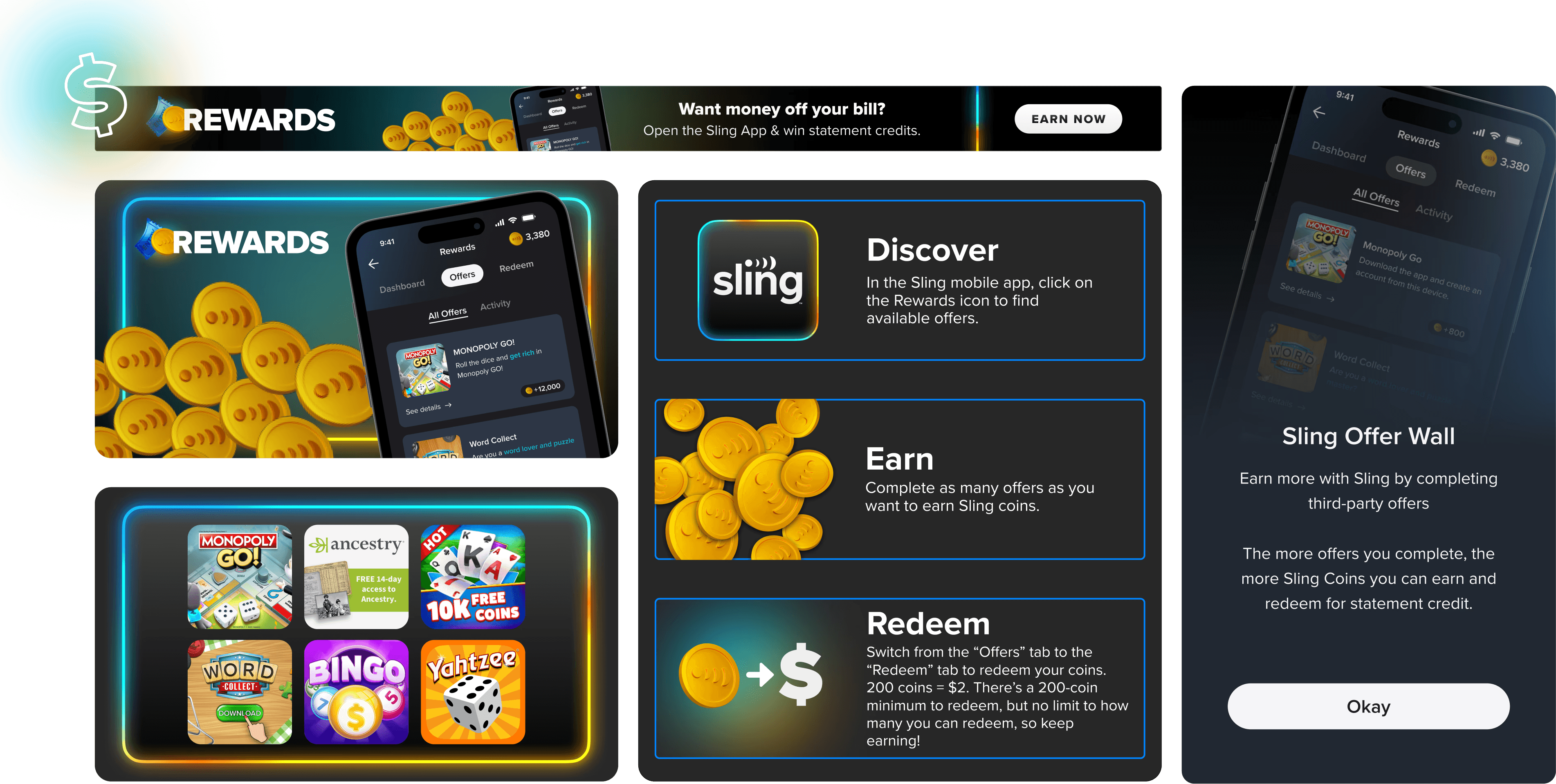
Alongside it, we introduced Offer Wall, a second path where users could actively earn Sling Coins by completing simple actions like trying apps, answering surveys, or engaging with partner offers.
That changed what rewards meant inside the product.
These were not just points or sweepstakes entries. They were usable value.
Users could apply coins toward their Sling subscription, unlock premium services like HBO, Paramount+, Showtime, or AMC+, add packs like Sports Extra, or use them on rentals and purchases.
Now the experience felt more complete. One part created habit. The other gave users a clearer reason to stay engaged.
Instead of replacing Spin & Win, we built alongside it.
Spin & Win stayed exactly where it was, continuing to drive daily behavior and give users that quick moment of excitement when they unlocked a spin.
Alongside it, we introduced Offer Wall, a second path where users could actively earn Sling Coins by completing simple actions like trying apps, answering surveys, or engaging with partner offers.
That changed what rewards meant inside the product.
These were not just points or sweepstakes entries. They were usable value.
Users could apply coins toward their Sling subscription, unlock premium services like HBO, Paramount+, Showtime, or AMC+, add packs like Sports Extra, or use them on rentals and purchases.
Now the experience felt more complete. One part created habit. The other gave users a clearer reason to stay engaged.
Instead of replacing Spin & Win, we built alongside it.
Spin & Win stayed exactly where it was, continuing to drive daily behavior and give users that quick moment of excitement when they unlocked a spin.
Alongside it, we introduced Offer Wall, a second path where users could actively earn Sling Coins by completing simple actions like trying apps, answering surveys, or engaging with partner offers.
That changed what rewards meant inside the product.
These were not just points or sweepstakes entries. They were usable value.
Users could apply coins toward their Sling subscription, unlock premium services like HBO, Paramount+, Showtime, or AMC+, add packs like Sports Extra, or use them on rentals and purchases.
Now the experience felt more complete. One part created habit. The other gave users a clearer reason to stay engaged.
HOW WE SHIPPED IT
HOW WE SHIPPED IT
HOW WE SHIPPED IT
Nothing new to learn, just more to gain
Nothing new to learn, just more to gain
Nothing new to learn, just more to gain
We were careful not to disrupt what was already working.
Spin & Win remained exactly where users expected it. Offer Wall was introduced as an additional way to earn, not a replacement and not a new behavior users had to relearn from scratch.
From a user perspective, the routine stayed familiar. They were still watching, still spinning, still returning. The difference was that now, the outcome felt more worth it.
It did not feel like a brand-new feature. It felt like the rewards experience had grown up.
We were careful not to disrupt what was already working.
Spin & Win remained exactly where users expected it. Offer Wall was introduced as an additional way to earn, not a replacement and not a new behavior users had to relearn from scratch.
From a user perspective, the routine stayed familiar. They were still watching, still spinning, still returning. The difference was that now, the outcome felt more worth it.
It did not feel like a brand-new feature. It felt like the rewards experience had grown up.
We were careful not to disrupt what was already working.
Spin & Win remained exactly where users expected it. Offer Wall was introduced as an additional way to earn, not a replacement and not a new behavior users had to relearn from scratch.
From a user perspective, the routine stayed familiar. They were still watching, still spinning, still returning. The difference was that now, the outcome felt more worth it.
It did not feel like a brand-new feature. It felt like the rewards experience had grown up.
WHAT CHANGED
WHAT CHANGED
WHAT CHANGED
From hoping to earning
From hoping to earning
From hoping to earning
Once Offer Wall launched, the system started to shift in a more meaningful way.
Spin & Win continued to scale, but now users also had a clearer and more reliable path to earning. Early on, Offer Wall drove strong coin issuance and redemption, giving users visible proof that their effort could translate into something usable inside the product.
Once Offer Wall launched, the system started to shift in a more meaningful way.
Spin & Win continued to scale, but now users also had a clearer and more reliable path to earning. Early on, Offer Wall drove strong coin issuance and redemption, giving users visible proof that their effort could translate into something usable inside the product.
Once Offer Wall launched, the system started to shift in a more meaningful way.
Spin & Win continued to scale, but now users also had a clearer and more reliable path to earning. Early on, Offer Wall drove strong coin issuance and redemption, giving users visible proof that their effort could translate into something usable inside the product.
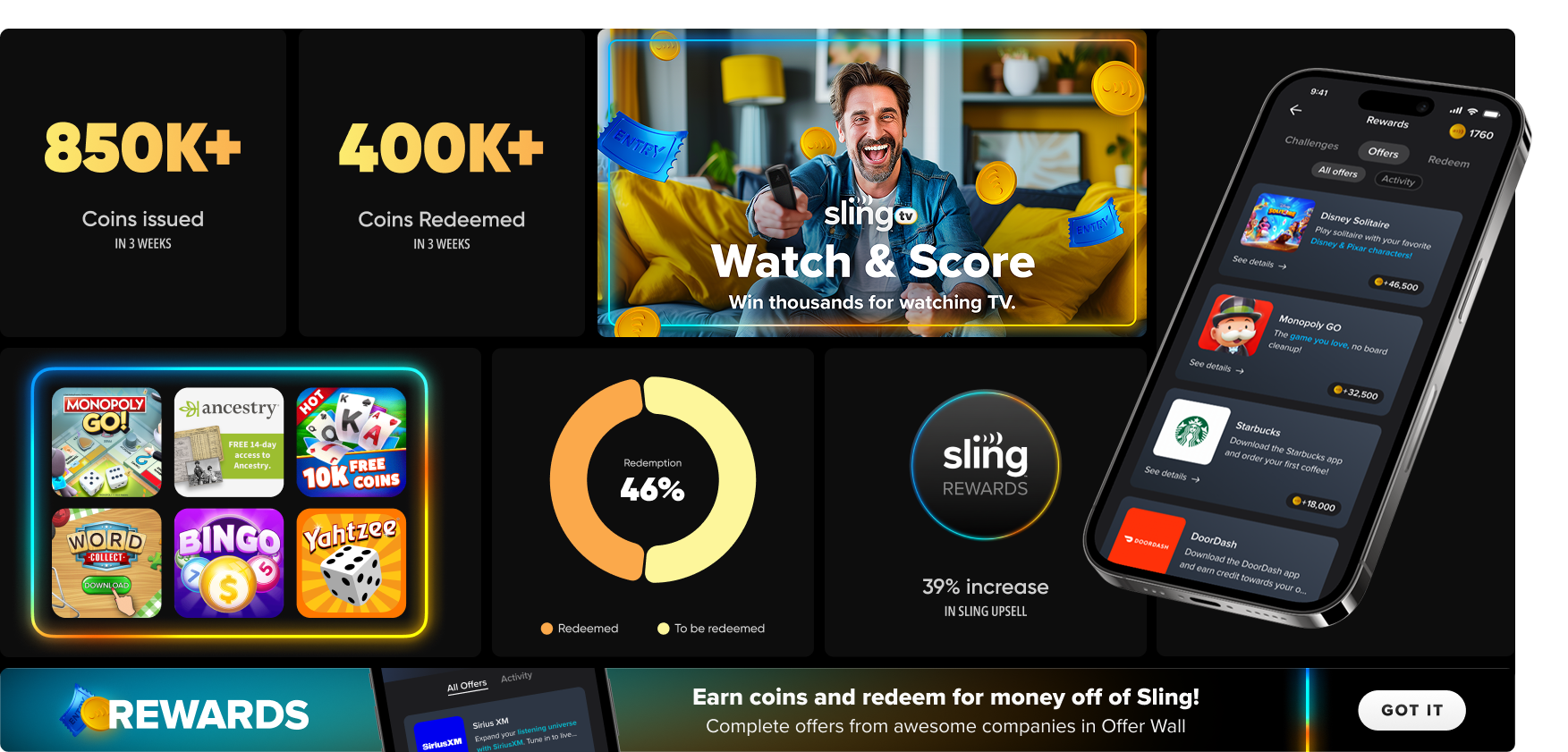
But the bigger change was not just in the numbers. It was in the behavior.
Users were no longer participating for a slim chance at value. They were earning and actually using what they earned, whether that meant lowering their subscription cost, unlocking premium content, or getting more out of Sling overall.
The experience moved from something that might pay off to something that usually does.
But the bigger change was not just in the numbers. It was in the behavior.
Users were no longer participating for a slim chance at value. They were earning and actually using what they earned, whether that meant lowering their subscription cost, unlocking premium content, or getting more out of Sling overall.
The experience moved from something that might pay off to something that usually does.
But the bigger change was not just in the numbers. It was in the behavior.
Users were no longer participating for a slim chance at value. They were earning and actually using what they earned, whether that meant lowering their subscription cost, unlocking premium content, or getting more out of Sling overall.
The experience moved from something that might pay off to something that usually does.
WHAT THIS UNLOCKS
WHAT THIS UNLOCKS
WHAT THIS UNLOCKS
Rewards start working both ways
Rewards start working both ways
Rewards start working both ways
Once users can earn and spend within the product, rewards stop feeling like a separate feature and start becoming part of the core experience.
They begin to shape behavior, influence decisions, and create a stronger connection between time spent and value received. Engagement becomes more intentional. Rewards become more believable. And the relationship between user benefit and business value starts to feel more balanced.
There is still more to build, but the foundation became clear: rewards work better when they do more than entertain. They need to give something back in a way users can understand, trust, and use.
When people enjoy the experience and trust what they get from it, they do not just come back. They come back with a reason.
Once users can earn and spend within the product, rewards stop feeling like a separate feature and start becoming part of the core experience.
They begin to shape behavior, influence decisions, and create a stronger connection between time spent and value received. Engagement becomes more intentional. Rewards become more believable. And the relationship between user benefit and business value starts to feel more balanced.
There is still more to build, but the foundation became clear: rewards work better when they do more than entertain. They need to give something back in a way users can understand, trust, and use.
When people enjoy the experience and trust what they get from it, they do not just come back. They come back with a reason.
Once users can earn and spend within the product, rewards stop feeling like a separate feature and start becoming part of the core experience.
They begin to shape behavior, influence decisions, and create a stronger connection between time spent and value received. Engagement becomes more intentional. Rewards become more believable. And the relationship between user benefit and business value starts to feel more balanced.
There is still more to build, but the foundation became clear: rewards work better when they do more than entertain. They need to give something back in a way users can understand, trust, and use.
When people enjoy the experience and trust what they get from it, they do not just come back. They come back with a reason.
More Projects
More Projects
More Projects
Looks like you'd like to see more
Looks like you'd like to see more
Looks like you'd like to see more




Are you still watching? Get in touch
© 2026 Saumya Ghai
Are you still watching? Get in touch
© 2026 Saumya Ghai
Are you still watching? Get in touch
© 2026 Saumya Ghai
Are you still watching? Get in touch
© 2026 Saumya Ghai